The Professional Shift: Why Healthcare is Returning to Controlled Dictation in 2026
March 01, 2026
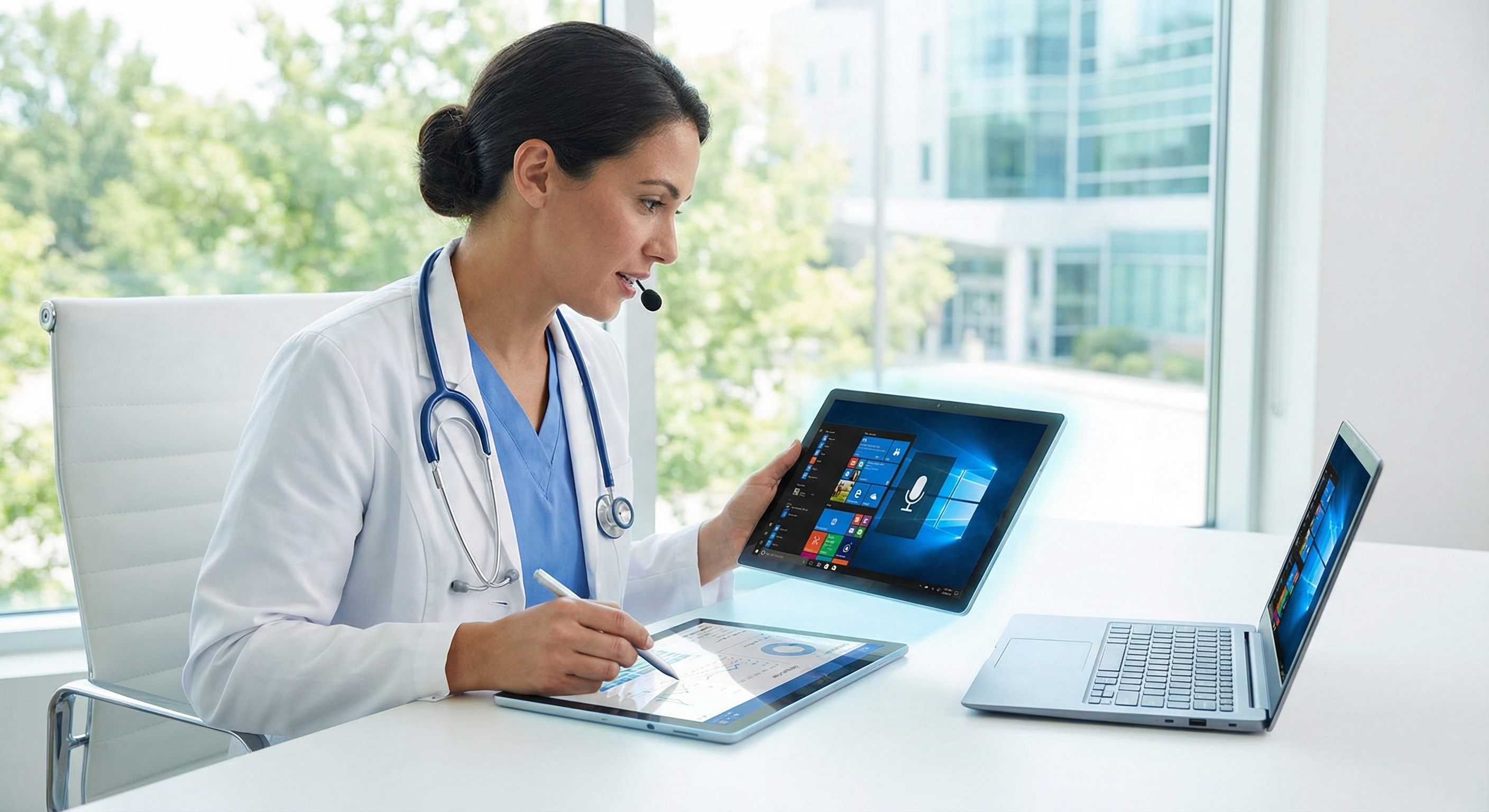
As we cross into March 2026, the healthcare documentation landscape is undergoing a quiet but profound reversal. For the last two years, the industry narrative was dominated by "ambient AI"—the promise of "set it and forget it" listening devices that would magically turn patient encounters into perfect SOAP notes.
But the data from the first quarter of 2026 tells a different story. Medical groups and legal firms are seeing a resurgence in active, controlled dictation. The reason? The "Ambient Liability Trap" and the high cognitive cost of deferred editing.
The Ambient Burnout
Ambient AI was supposed to cure burnout. Instead, for many specialists, it simply shifted the burden. Rather than spending 5 minutes dictating a precise note, clinicians now spend 15 minutes at the end of the day "policing" 20 different AI-generated summaries for subtle hallucinations or missing clinical nuances.
When the note is generated passively, the "intent" is often lost. The AI captures the conversation, but it doesn't necessarily capture the *clinical judgment* of the provider.
Why 2026 is the Year of Controlled Input
The shift we are seeing is toward high-bandwidth, intentional input. Professionals are realizing that it is faster to be right the first time than to fix a "mostly right" draft later. This is where the concept of "Strategic Dictation" comes in.
By using tools like DictaFlow, which are designed for Windows-native speed and VDI reliability, providers can maintain a "human-in-the-loop" workflow without the traditional lag of legacy systems.
1. Zero-Latency VDI Bypass
One of the biggest blockers for medical and legal professionals has always been the lag of dictating into a remote Citrix or RDP environment. In 2026, the standard has moved to local-process injection. You dictate at the speed of your local machine, and the text appears in the remote EHR or CMS instantly.
2. The Power of "Hold-to-Talk"
The "always-on" microphone is a privacy and accuracy nightmare. The return to a physical or digital "Push-to-Talk" (PTT) mechanism allows for precise control. You only record when you are thinking and speaking clearly. This drastically reduces the "Edit Tax" that plagues ambient systems.
3. "Actually Override"
The most critical feature of 2026 dictation is the ability to correct as you go. "Actually Override" isn't just a technical feature; it's a workflow philosophy. If the AI misinterprets a complex pharmaceutical name or a specific legal citation, you fix it mid-sentence. You finish the note when you finish the thought.
The Verdict
Ambient AI has its place for low-stakes administrative tasks. But for high-stakes professional documentation, the industry is moving back to active, high-bandwidth tools.
If you're still fighting with ambient hallucinations or VDI lag, it's time to look at how a Windows-native, controlled dictation stack can give you back your time—and your clinical peace of mind.
Related DictaFlow Guides
Explore the pages built for the exact workflows these posts keep touching: Windows dictation, Citrix/VDI, medical documentation, legal drafting, and side-by-side comparisons.
Ready to stop typing?
DictaFlow is the only AI dictation tool built for speed, privacy, and technical workflows.
Download DictaFlow Free