Physiotherapy Offices and the Documentation Burden: Why Dictation is the Answer
March 13, 2026
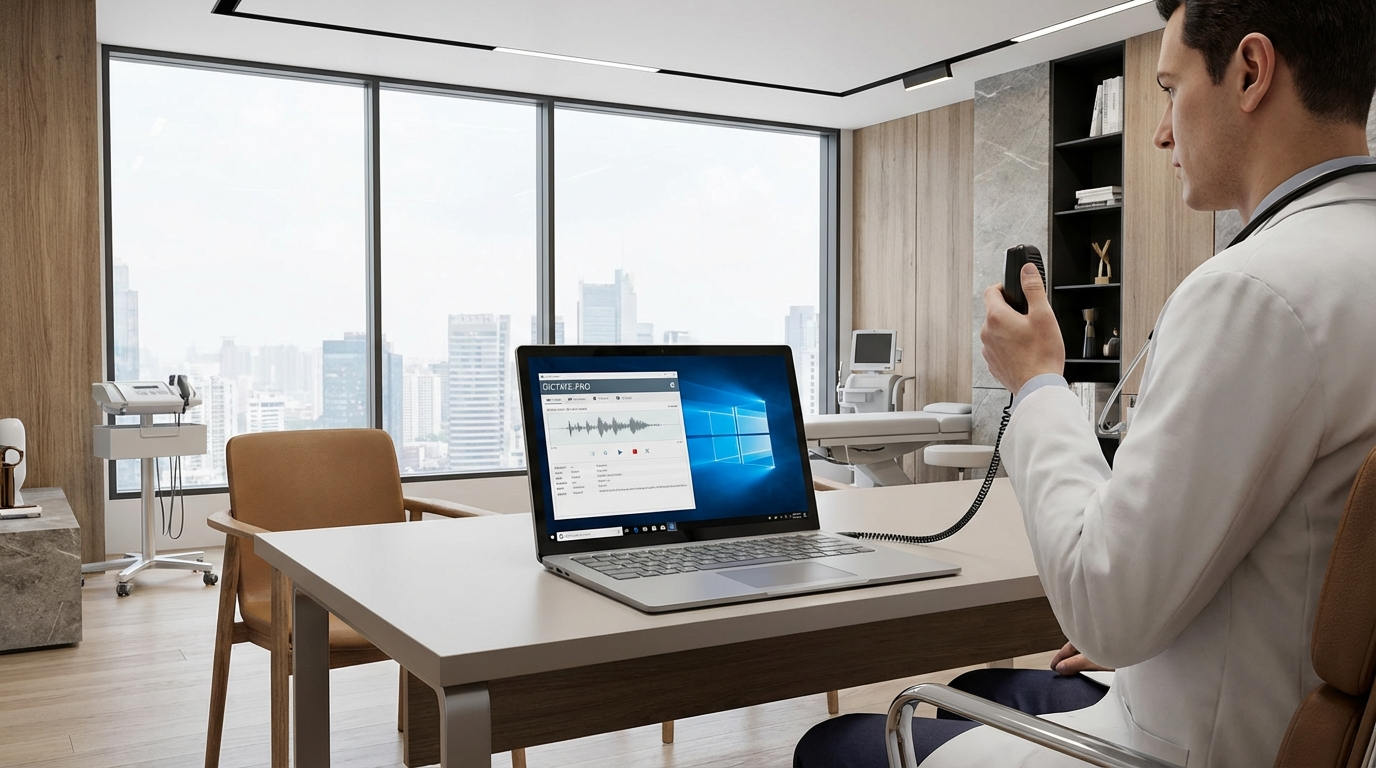
Physiotherapy is an inherently hands-on profession. Practitioners spend their days physically guiding patients through exercises, assessing joint mobility, and providing manual therapy. Yet, despite the physical nature of the work, a staggering amount of a physiotherapist's day is consumed by a decidedly sedentary task which is typing clinical notes.
The documentation burden in physiotherapy is significant. Every session requires detailed records covering subjective feedback, objective measurements, assessment details, and the evolving treatment plan. When seeing a full caseload of patients back-to-back, these notes quickly pile up. Many practitioners find themselves staying late after the clinic closes or sacrificing their lunch breaks just to catch up on typing. This administrative load not only leads to burnout but also detracts from the energy available for patient care.
Traditional typing is simply too slow for the volume of narrative detail required in modern physiotherapy charting. Voice dictation offers a clear way out of this trap. By speaking their notes aloud, physiotherapists can capture complex anatomical descriptions, functional observations, and nuanced patient interactions in a fraction of the time it takes to type them. Speech is fundamentally faster than typing, allowing practitioners to document comprehensively without the structural bottleneck of a keyboard.
DictaFlow is specifically designed to meet the demands of fast-paced clinical environments. Powered by medical-grade speech recognition, it effortlessly handles complex anatomical terminology and procedural descriptions with exceptional accuracy. Because DictaFlow is a Windows-native application, it integrates seamlessly into existing Electronic Medical Record systems without requiring cumbersome cloud portals or browser extensions.
Crucially for many healthcare networks, DictaFlow bypasses the latency issues common in Citrix and Virtual Desktop Infrastructure environments. By operating at the driver level, it ensures that words appear on the screen the moment they are spoken, completely eliminating the frustrating delay that plagues other dictation tools. The inclusion of a Hold-to-Talk feature further enhances control, allowing practitioners to dictate precisely when they need to, even in a busy, noisy clinic.
Transitioning to dictation transforms the daily workflow of a physiotherapy office. It reclaims hours of lost time, reduces the cognitive load of data entry, and allows therapists to leave work at work. For clinics looking to improve both practitioner well-being and operational efficiency, adopting a robust dictation engine is not just an upgrade, but an essential step forward.
Related DictaFlow Guides
Explore the pages built for the exact workflows these posts keep touching: Windows dictation, Citrix/VDI, medical documentation, legal drafting, and side-by-side comparisons.
Ready to stop typing?
DictaFlow is the only AI dictation tool built for speed, privacy, and technical workflows.
Download DictaFlow Free