Everyone Was Looking For DeepSeek V4. Xiaomi's "Hunter Alpha" Proved They Are Missing The Point.
March 19, 2026
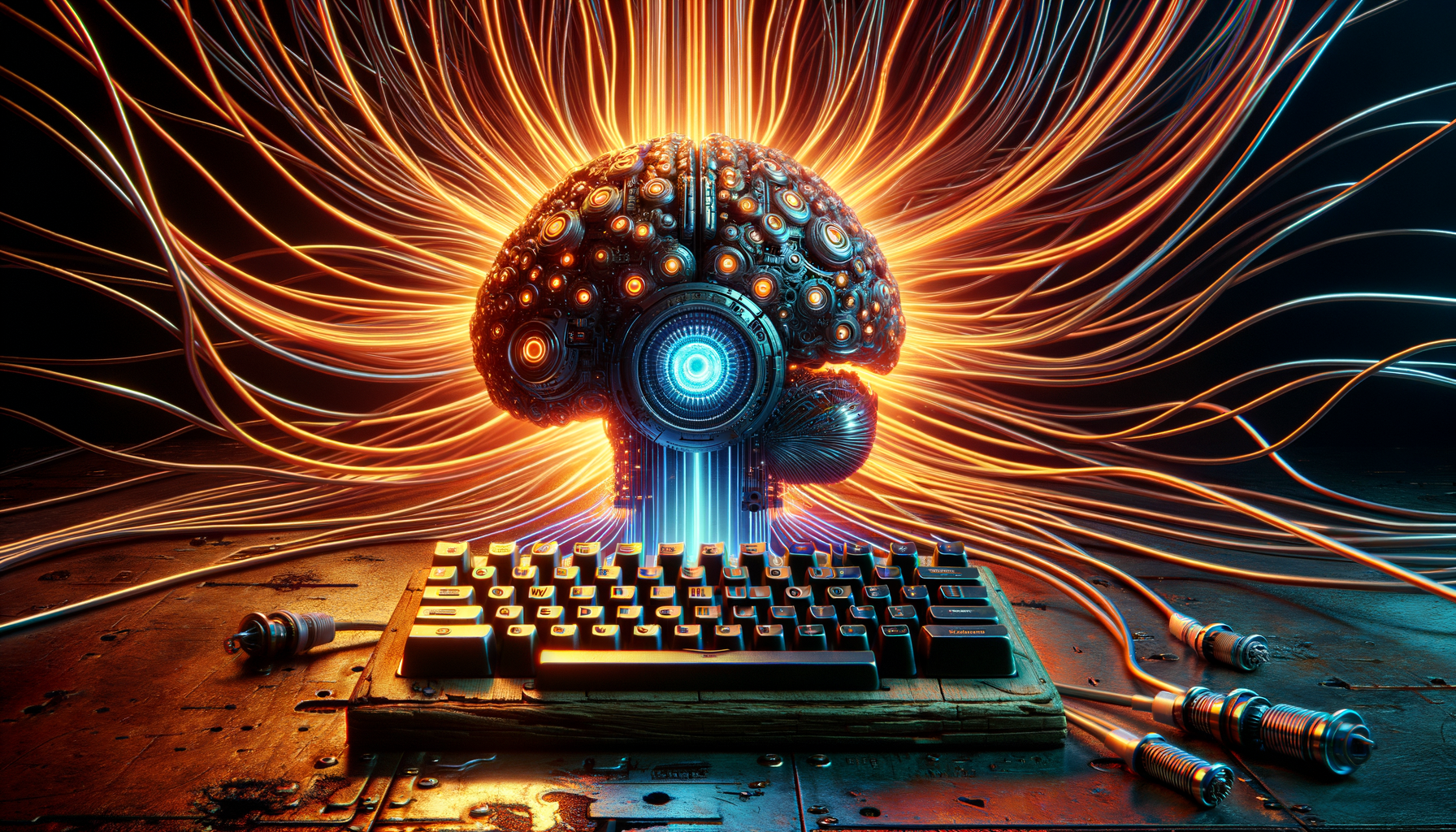
!AI Agentic Brain vs QWERTY Keyboard

For the last 48 hours, developers and analysts were buzzing about a mystery AI model named "Hunter Alpha" that started appearing in benchmarks. The rumor mill was convinced this was DeepSeek V4—the highly anticipated next-generation flagship from the company that recently rattled the entire industry.
It turns out everyone was looking in the wrong direction.
Yesterday, Xiaomi’s AI model team, MiMo, revealed that "Hunter Alpha" was actually an early internal build of MiMo-V2-Pro. Rather than being a traditional language model, Xiaomi designed this flagship explicitly to serve as the "brain" for AI agents—tools built to autonomously connect hardware and software with far less human intervention than a standard chatbot.
The industry's obsession with agentic AI is clear. We are entering an era where AI isn't just answering questions; it's executing complex, multi-step workflows across your operating system.
But there is a glaring paradox in this multi-billion dollar arms race.
The Agentic Brain vs. The 19th-Century Bottleneck
Tech giants like Xiaomi, Nvidia, and Microsoft are building digital brains capable of processing millions of tokens and executing code in milliseconds. Yet, the way humans actually *instruct* these supercomputers remains trapped in the 1800s.
We are still using the QWERTY keyboard.
Think about the workflow of an engineer, a lawyer, or a medical professional trying to leverage these new "agentic" tools. You have a complex, multi-layered problem you need the AI to solve. But to get the AI to do the work, you have to painstakingly type out the entire context, the constraints, and the exact steps.
The friction of typing complex, nuanced instructions completely kills the "flow state" that agentic AI is supposed to enable. The physical input speed of human fingers simply cannot keep up with the processing speed of the tools we are building.
Bridging the Gap with Voice
If we are going to use AI agents to automate software workflows, we need an input method that matches the speed of thought.
Voice dictation has historically been frustrating for complex work because of "start/stop" delays, transcription errors, and absolute chaos when dealing with legacy environments like Citrix or Remote Desktop (VDI). But the underlying speech-to-text models have caught up. The problem now is the *interface*.
This is exactly why we built DictaFlow.
DictaFlow is a Windows-native application designed to bypass the physical typing bottleneck. Instead of fighting with a keyboard to instruct your AI tools, DictaFlow uses a simple Hold-to-Talk (PTT) interface that works universally across your desktop—even inside notoriously laggy VDI and Citrix environments.
It captures your train of thought exactly as fast as you can speak, seamlessly translating complex problem statements into text without the cognitive tax of typing.
Xiaomi’s new MiMo-V2-Pro proves that the "brains" behind AI are ready to do the heavy lifting. Now, it's time to upgrade how we talk to them. Stop typing your instructions. Start speaking them.
Related DictaFlow Guides
Explore the pages built for the exact workflows these posts keep touching: Windows dictation, Citrix/VDI, medical documentation, legal drafting, and side-by-side comparisons.
Ready to stop typing?
DictaFlow is the only AI dictation tool built for speed, privacy, and technical workflows.
Download DictaFlow Free