The Edit Tax: Why Ambient AI Notes Are Triggering a New Compliance Burden in 2026
February 25, 2026
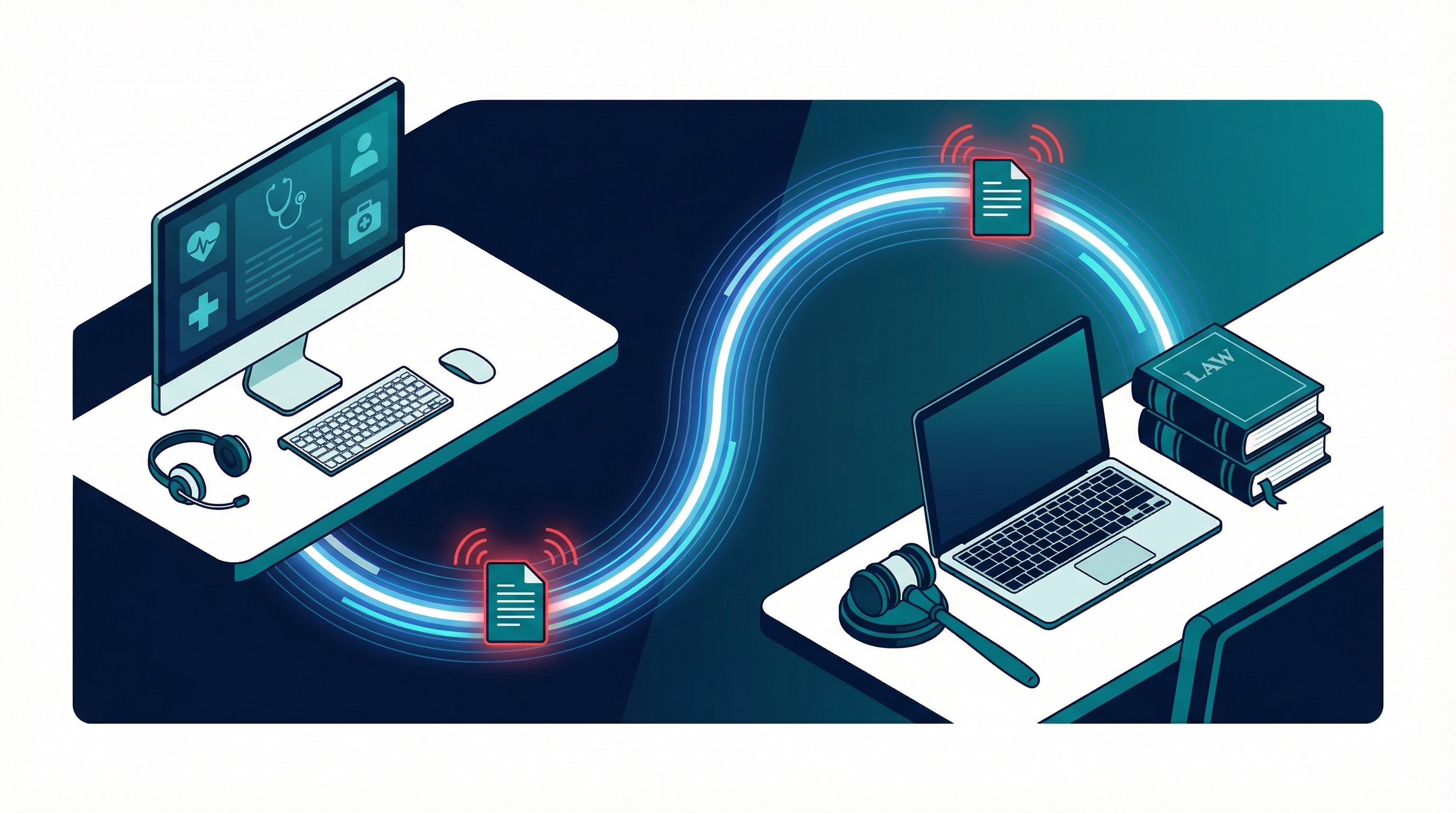
If you talk to clinicians or lawyers right now, you hear the same thing: AI can draft quickly, but someone still has to clean up the output before it goes on record.
That cleanup step is becoming the real bottleneck.
In healthcare, ambient scribes are getting attention because they reduce typing and can save time during patient visits. In legal, AI drafting tools can produce first-pass letters, summaries, and notes in seconds. The promise is speed. The reality is that speed shifts pressure to the review phase.
Teams are learning that "faster draft" does not always mean "faster final document."
The trend behind the noise
Several 2026 legal forecasts frame AI as table stakes. Healthcare research on ambient scribes is showing similar momentum, but also a familiar warning: quality, privacy, and edit burden all show up quickly once pilots move into daily use.
That matches what frontline users are saying privately. They are not anti-AI. They are anti-rework.
A rough note that takes ten minutes to fix is still expensive, especially in regulated workflows where final text can impact billing, audits, patient safety, or legal exposure.
This is where teams get surprised. They buy for automation, then discover they have purchased review load.
Why the edit burden gets worse in regulated environments
In consumer writing tools, a sloppy sentence is annoying. In clinical or legal documentation, it can become a risk event.
Three patterns keep showing up:
1) Overlong output that feels complete but hides small factual mistakes.
2) Style mismatch with the professional's normal voice, forcing heavy rewrites.
3) Documentation drift, where AI inserts plausible but unnecessary detail that later needs to be defended.
When those three combine, every note takes "just one more pass." Multiply that by a full day of appointments, hearings, or client calls, and the gains disappear.
The trust problem is now operational
Most AI debates still focus on accuracy percentages. In practice, trust is more granular.
Can this draft keep names, dates, medications, and legal facts exactly right?
Can it follow the exact format a clinic or firm needs?
Can it be corrected instantly when context changes mid-sentence?
If the answer is no, users stop relying on it for final output and treat it as a rough helper. That is still useful, but it is not transformational. It becomes another screen to manage.
This is why teams are moving away from "fully automatic" marketing language and toward controlled workflows where human intent stays in the loop.
What winning teams are doing differently
The strongest 2026 deployments are not trying to remove humans from documentation. They are redesigning input and correction.
That means:
- tighter capture in noisy VDI and remote desktop environments
- explicit hold-to-talk control instead of always-on capture
- immediate correction paths so users can fix wording in the moment
- narrower templates and specialty vocabularies, not generic broad prompts
In short, they are reducing post-edit friction instead of trying to hide it.
For Windows-heavy organizations, this is especially important. Citrix and other virtual desktop setups can add lag that breaks dictation flow. If input feels delayed, users speak less naturally, errors increase, and editing balloons.
When teams fix the input path first, the downstream AI gets better with less cleanup.
Why this matters for budgets right now
CFOs and operations leaders are asking a harder question in 2026: what is the cost per finalized document, not just cost per generated draft?
That shift changes buying decisions.
A cheaper model that needs constant editing can cost more than a focused stack that gets near-final output in one pass.
The same logic applies to risk. If each output requires extensive manual correction, variance goes up. Variance drives audit headaches, malpractice anxiety, and inconsistent client service.
The best metric is no longer "how much did AI write?" It is "how often did the professional accept the first version with minimal changes?"
The next phase: assistive systems with controllable input
The market is moving from passive capture toward active control.
Passive capture sounds efficient, but many professionals need to steer exactly what gets recorded and how it is phrased. That is why hold-to-talk and rapid override workflows are gaining traction.
For documentation work, control beats convenience when accountability is high.
This is also why purpose-built tools are outperforming generic chat interfaces in medical and legal use cases. Generic AI can be impressive in demos. Production documentation needs repeatability.
Where DictaFlow fits
DictaFlow is built around that reality.
It is Windows-native and designed for high-friction environments where mainstream dictation struggles, including Citrix and VDI workflows. Instead of forcing users into a passive transcript model, it focuses on controlled dictation with hold-to-talk and immediate correction through Actually Override.
The goal is simple: reduce the edit tax before it starts.
If the first pass is closer to final, teams recover time, reduce stress, and lower documentation risk.
That is the practical win in 2026. Not "AI wrote everything." More like "the professional stayed in control, and the final note was done faster."
If your team is evaluating AI documentation tools this quarter, measure review burden explicitly. Count how much post-editing happens per finalized note, and where it happens in your workflow.
That number will tell you more than any marketing claim.
Learn more at https://dictaflow.io/
Related DictaFlow Guides
Explore the pages built for the exact workflows these posts keep touching: Windows dictation, Citrix/VDI, medical documentation, legal drafting, and side-by-side comparisons.
Ready to stop typing?
DictaFlow is the only AI dictation tool built for speed, privacy, and technical workflows.
Download DictaFlow Free