The AI Agent Wave Is Real, But Legal and Medical Teams Still Lose Hours at the Point of Input
February 17, 2026
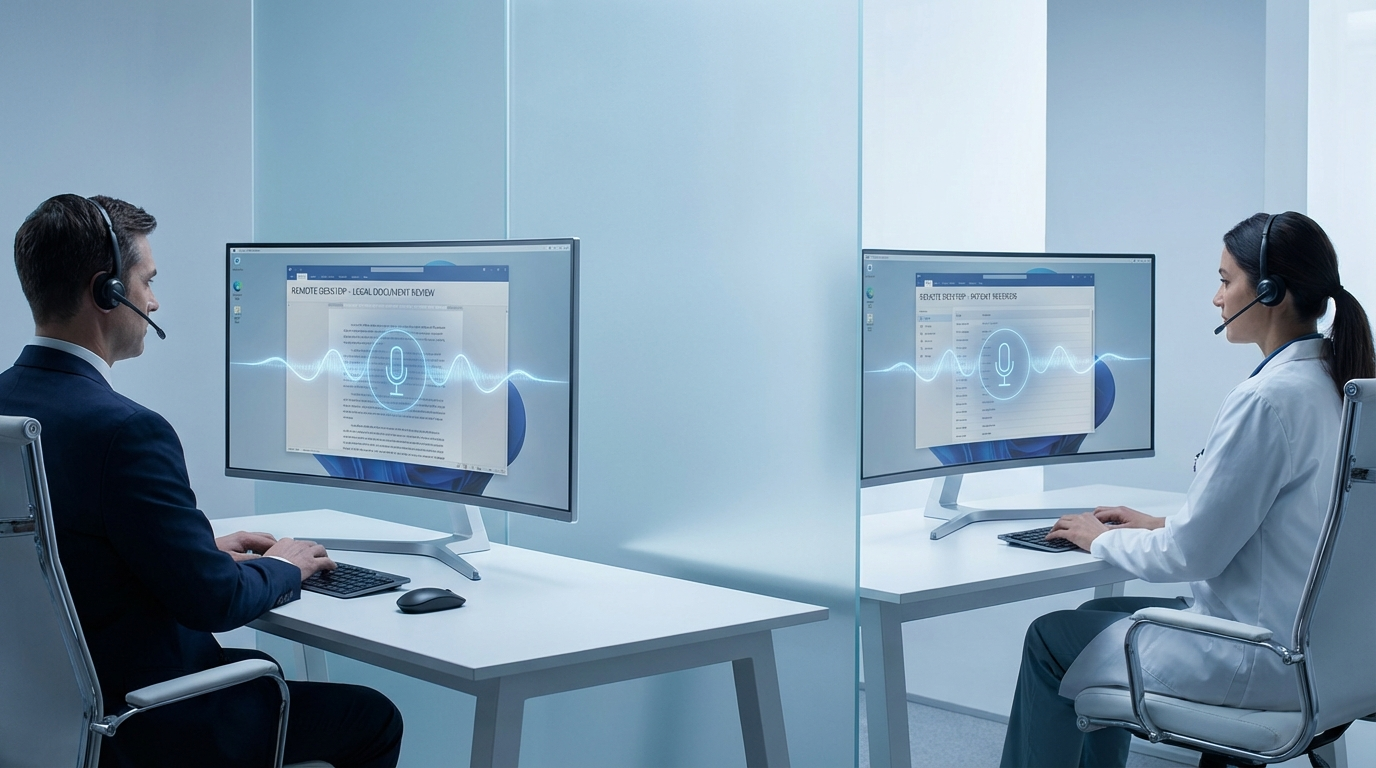
If you have been watching legal tech and healthcare AI this month, one pattern keeps showing up: everyone is talking about agents. Not chatbots that wait for prompts, but systems that can triage work, route tasks, summarize records, and draft next steps with less hand-holding. That shift is real, and honestly overdue.
The catch is less exciting. Most teams are trying to run this new layer on top of old input pipelines that were already fragile. In law firms, attorneys still fight formatting drift and context loss when moving from notes to briefs. In clinics, staff still lose time pushing text into EHR fields that lag, freeze, or silently drop edits under Citrix and remote desktop sessions. So yes, the AI layer is getting smarter. But the handoff from human thought to usable text is still where work breaks.
Why this is the hidden bottleneck in 2026
The market narrative says we are entering an automation era. That is true at the workflow level. It is not true at the keyboard and dictation level for a lot of teams.
Most legal and medical environments are still built around a patchwork of remote desktops, locked-down endpoints, and software that was never designed for modern voice workflows. You can launch a brilliant drafting assistant, then lose the win because a dictated sentence arrives late, lands in the wrong field, or gets mangled when someone tries to correct one clause in the middle of a paragraph.
That mismatch matters more now because agent systems amplify upstream errors. If the input is wrong, every downstream step gets worse: summaries become less reliable, auto-drafted sections miss intent, and review time climbs. Teams then blame the model when the real issue started before the model ever touched the text.
What legal teams are seeing on the ground
Law is one of the clearest examples because precision has immediate consequences. A misplaced date, a missing qualifier, or a sloppy correction can change meaning in ways no one wants to discover during filing review.
The common failure mode is not dramatic. It is repetitive friction. Lawyers think faster than they type. They switch between analysis, evidence references, and exact language requirements in seconds. Generic dictation tools often force a stop-start rhythm that interrupts that flow. Mid-sentence corrections feel awkward, so people backspace too much, re-dictate entire lines, and lose momentum.
Remote desktops make this worse. In many firms, the final document lives in an environment where standard consumer dictation shortcuts are unreliable. That leaves teams with one bad choice after another: type manually and slow down, or dictate and spend extra time fixing the output.
What healthcare teams are seeing on the ground
Healthcare has the same problem with higher throughput pressure. Clinicians are expected to move quickly, finish charts, and stay accurate while context-switching all day. AI scribes and assistants help with structure, but the last mile still depends on how fast and safely text enters clinical systems.
In VDI-heavy settings, clinicians often report a familiar pattern: they speak, wait, then watch text appear in bursts that are just late enough to be disruptive. If they pause to correct something, the editor state can shift and the correction lands in the wrong spot. Over a full clinic day, those tiny interruptions become real fatigue.
This is why many teams still end shifts with unfinished documentation, even after paying for new AI tools. The problem is not a lack of intelligence in the stack. It is that input reliability is treated as an accessory when it should be treated as infrastructure.
The practical shift: build around input reliability first
For teams trying to get measurable ROI from AI this year, there is a simple sequence that works better.
Start by stabilizing input under real working conditions, especially Citrix, RDP, and mixed endpoint environments. Then layer on drafting and automation. Not the other way around.
That means prioritizing systems built for constrained enterprise environments, not just clean local demos. It means supporting hold-to-talk so people can think and speak naturally without open-mic anxiety. It means enabling true in-line correction so a user can revise one phrase in the middle of a sentence without rewriting the whole thing.
When those basics are reliable, every downstream AI feature performs better. Summaries get cleaner. Structured outputs need less cleanup. Teams trust the system faster because they are not fighting it at the point of entry.
Where DictaFlow fits
DictaFlow was built around exactly this failure point. It is a Windows-native dictation workflow designed for environments where generic voice tools break, especially Citrix and other VDI setups. Instead of assuming ideal desktop conditions, it focuses on dependable text injection and fast correction in the places professionals actually work.
Three pieces matter most in practice. First, Citrix and RDP bypass behavior that keeps dictation usable in remote sessions. Second, hold-to-talk control so legal and medical users can dictate in short, intentional bursts. Third, Actually Override behavior that lets users correct mid-sentence content without nuking the rest of the paragraph.
None of that sounds flashy in a product keynote. It does show up in daily output. Teams spend less time fighting the cursor, less time redoing edits, and more time finishing documents on schedule.
What to do this week if you lead legal or clinical operations
Treat this as an operational test, not a branding decision. Pick one workflow with high documentation load and run a short pilot focused on friction metrics, not vanity metrics.
Measure correction time per note or draft section. Track how often users abandon dictation and revert to manual typing. Track completion time for end-of-day documentation. Track user-reported interruption points in remote sessions.
If those numbers improve, your automation layer will improve with them. If they do not, no amount of agent orchestration will rescue the stack.
The AI agent wave is absolutely real. But the teams that actually capture value in 2026 are not the ones with the fanciest demo. They are the ones that fix the handoff between human intent and machine execution.
If your environment includes Citrix, RDP, or heavy compliance workflows, that handoff is the whole game. DictaFlow is built for that exact moment. You can see the workflow at https://dictaflow.io/.
Related DictaFlow Guides
Explore the pages built for the exact workflows these posts keep touching: Windows dictation, Citrix/VDI, medical documentation, legal drafting, and side-by-side comparisons.
Ready to stop typing?
DictaFlow is the only AI dictation tool built for speed, privacy, and technical workflows.
Download DictaFlow Free