Healthcare and medical documentation
AI Scribe Safety in 2026: Why Review Stays Clinical
AI scribe safety needs a clear clinical review step. New NHS patient reports show why speed cannot outrun careful verification.
September 1, 2026
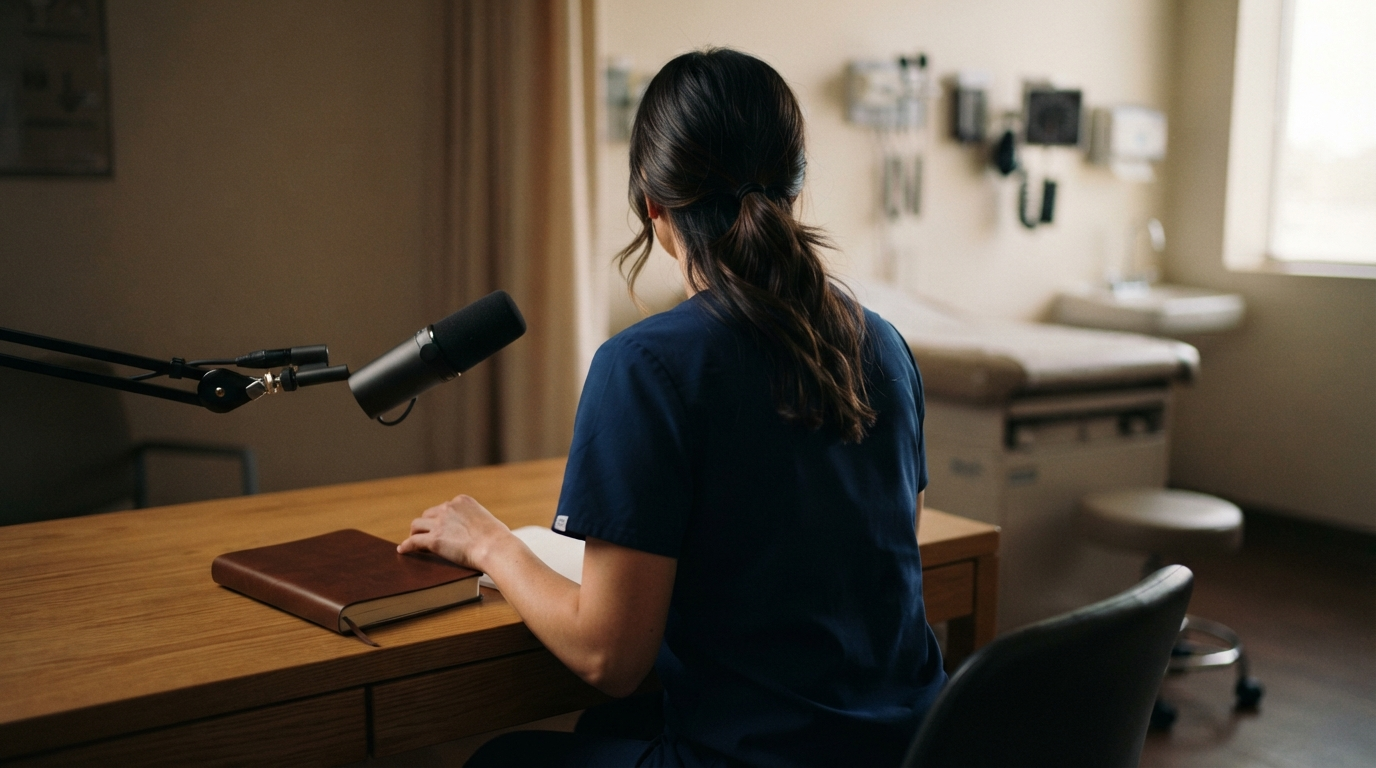
The latest warning about AI scribes is not an argument for putting the microphone back in the drawer. It is a reminder that a clinical note is not finished when software produces a neat paragraph. It is finished when the clinician responsible for the record has checked it.
A Guardian report on August 31 relayed Healthwatch England reports of ambient scribes recording the wrong diagnosis, confusing similarly named medicines, and leaving out prescription instructions.[1] One reported record turned "null demyelination" into "demyelination." That missing word changed the meaning in a frightening way.
That is the useful lesson from this story: generated clinical documentation needs a deliberate review step, not a casual glance while the next patient is waiting.
What the NHS reports do and do not show
The reported mistakes matter because they touch medication, diagnosis, and follow-up. They also need to be read carefully. These are patient reports collected by Healthwatch England, not a controlled error-rate study of every ambient scribe. They do not prove every tool is unsafe, or that clinicians should abandon dictation.
They do show a failure mode worth designing around. A plausible sentence can still be wrong. In a clinical record, "plausible" is a terrible quality bar.
There is a second part of the same picture. Walsall Healthcare NHS Trust recently announced an ambient voice rollout after an eight-month pilot. Its published workflow says the generated notes are reviewed, edited where needed, and approved before they enter the patient record.[2] That is the right boundary. The software can draft. A clinician owns the note.
The dangerous moment is the handoff
Most safety conversations focus on whether an AI model heard the consultation correctly. That matters, but the higher-risk moment is often later: the draft looks polished, the clinician is rushed, and the text gets treated as settled.
A good review process should make the high-consequence details hard to miss. Medication name, dose, route, frequency, allergies, test results, diagnoses, red flags, and follow-up instructions deserve a slower read than the rest of the note. The clinician should compare those fields with what was actually said or observed, not with what sounds medically natural on the screen.
There is a practical reason to keep this separate from ordinary proofreading. Grammar review asks whether a sentence reads cleanly. Clinical review asks whether the record is true, complete, and assigned to the right patient. Those are different jobs.
Speed only counts if the review fits the day
A documentation tool can save typing time and still create a bad workflow if it hands the clinician a long, dense draft that takes longer to audit than to write. The promise is not "never review this." The promise should be a draft that gives clinicians something clear to review and edit.
The Walsall announcement says its pilot reduced average documentation time to under four minutes per patient.[2] That result is useful, but it should not be flattened into a universal promise. A rollout, specialty, template, consultation type, and review habit all change the result. The safe test is local: does the workflow give the clinician enough time and enough visibility to catch the things that matter?
If the answer is no, the tool is moving work around, not removing it.
A simple review pattern for clinical teams
Teams do not need a theatrical safety process to make this better. They need a boring, repeatable one.
- Keep the draft clearly marked as a draft until a clinician approves it.
- Read medications, diagnoses, measurements, test results, and follow-up instructions against the encounter before signing.
- Make it easy to correct the note in the same place where it is reviewed.
- Give patients a clear route to flag errors in their record, and have an owner for fixing them.
- Track corrections by type. Repeated errors around a specialty term, drug name, or template are evidence that the workflow needs changing.
The United Kingdom's MHRA explains that software may fall within medical-device rules depending on its intended purpose. That is important context, but it does not replace local governance or clinician review.[3]
Where controlled dictation fits
Ambient systems try to capture a whole encounter and turn it into a structured note. Sometimes that is the right workflow. Sometimes a clinician wants a narrower tool: hold a key, dictate a referral, assessment, instruction, or patient message, then review the exact text before it is entered.
That narrower workflow has a useful property. The author can control when dictation starts, what task it is for, and where the text goes. DictaFlow Medical is built around controlled dictation that types into the active field, including locked-down clinical environments such as Citrix and remote desktops. It should still be reviewed before it becomes part of a clinical record. That is not a limitation to hide. It is the correct line of responsibility.
For organizations evaluating voice tools, the better purchase question is not "does it generate notes?" Ask: "where does human approval happen, and can people realistically do it on a busy day?"
The point is not to slow clinicians down
The appeal of voice documentation is obvious. People should spend less of a consultation staring at a keyboard and more time with the person in front of them. The latest NHS reports do not make that goal less worthwhile. They make the last step more important.
Use software to get a draft on the page. Keep a human responsible for the clinical meaning. That is how speed becomes useful instead of risky.
Sources
[1] The Guardian: Doctors' AI scribes get names of drugs and diagnoses wrong, NHS watchdog warns
[2] Walsall Healthcare NHS Trust: New digital Ambient Voice Technology
[3] MHRA: Software and artificial intelligence as a medical device