April 24, 2026
Why Oral Exams Are Coming Back in the Age of AI Homework
For years, the standard college workflow was simple: take the prompt home, open your laptop, write the paper, turn it in. That workflow is breaking down.
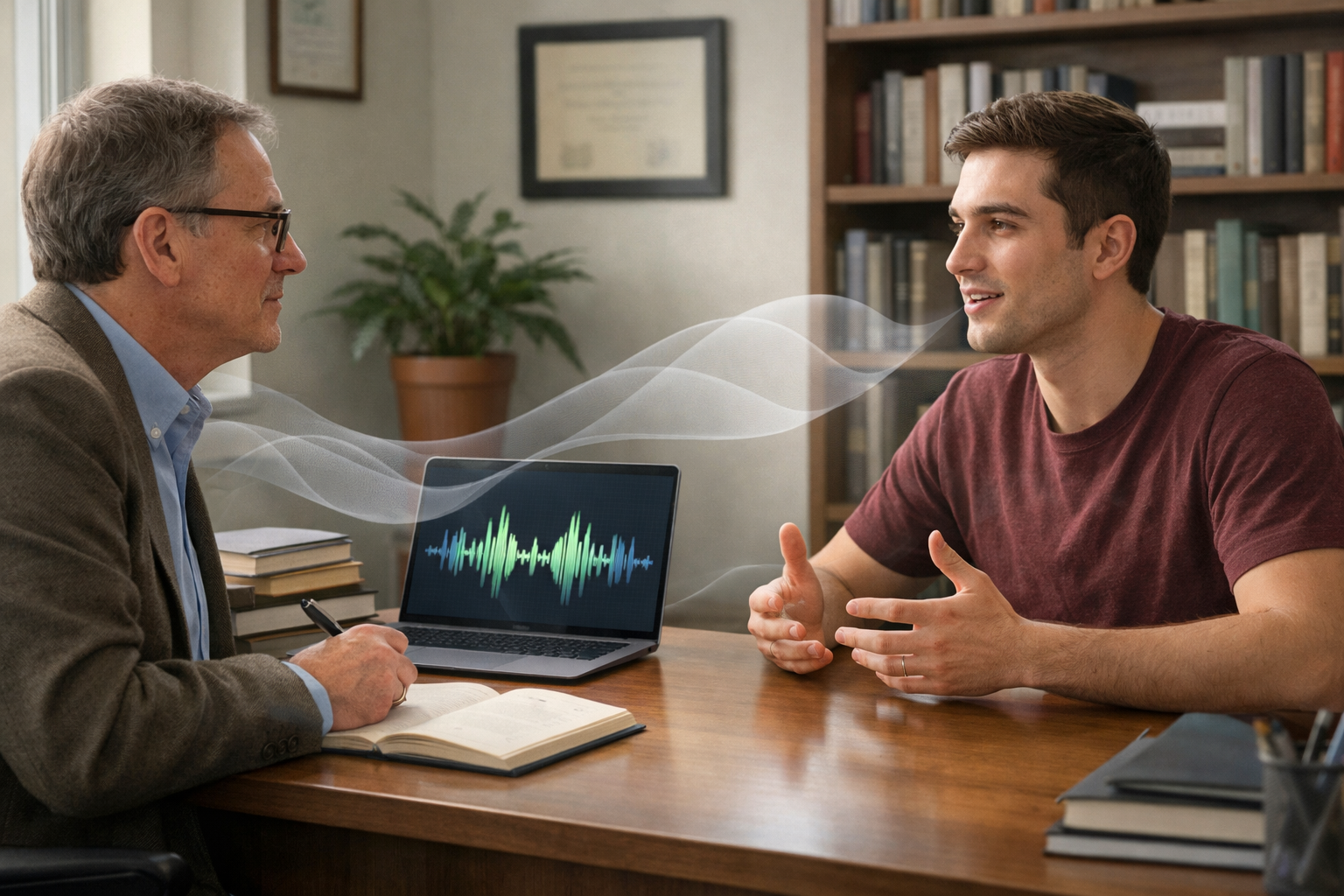
This week, an Associated Press report described professors at Cornell, Penn, and NYU bringing back oral exams because written assignments are getting too easy to fake with AI. In Cornell biomedical engineering, Chris Schaffer now asks students to defend their work face to face. His point is pretty blunt: you can use a chatbot to polish a paragraph, but you cannot fake real understanding in a live conversation for long.
The same pattern is showing up elsewhere. The Brown Daily Herald reported that one economics midterm at Brown had a median score of 98%, with 40 of 86 students earning 100%. The professor said the distribution was so strange that he moved back to in-person exams. He also noticed something a lot of instructors will recognize: the homework looked perfect, but the test performance did not.
That gap is the whole story. Colleges are not just worried about cheating. They are worried that students are outsourcing the messy part of learning, forming an idea, testing it, saying it in their own words, and defending it when someone pushes back.
The real problem is not just plagiarism
When a student submits an essay they did not really write, the immediate issue is academic integrity. But the deeper issue is what happens next.
If a professor asks, "Why did you make that claim?" or "Can you explain this paragraph in plain English?" and the student freezes, the paper was never really theirs. The writing and the thinking got separated.
That is why oral exams make sense right now. They force the final draft and the student’s actual understanding to line up. Penn professor Emily Hammer put it well in the AP story: the concern is not only cheating, but students losing cognitive capacity and creativity. That feels right to me. The danger is not just that AI helps students slip past an assignment. It is that students stop practicing the mental moves good writing depends on.
This is also why AI detectors are such a dead end. They turn assessment into a police game. Students get falsely flagged, instructors waste time, and nobody learns much. A short oral defense is much cleaner. If a student knows the material, it shows. If they do not, that shows too.
Students should write the way they will be tested
If more colleges are moving toward oral defenses, students need a better drafting workflow than "type silently, then hope I can explain it later."
That is where DictaFlow fits.
DictaFlow is a hold-to-talk dictation app for Mac, Windows, and iOS. You press a hotkey, speak, release, and your words appear instantly in any app. More importantly for students, it lets you draft by talking through your argument instead of manufacturing a polished sounding essay that you cannot later defend.
That matters because spoken explanation is usually the first proof that you actually understand something. If you can say your thesis out loud, explain your evidence, and recover when you lose the thread, you are much more likely to survive an oral exam. Your written work starts sounding like you because it came from you.
There is also an accessibility angle here that colleges should not ignore. A 2024 study indexed on PubMed found that speech to text can help students with writing difficulties produce longer texts and improve higher order parts of writing like vocabulary diversity and overall text quality. That matters because plenty of students can explain an idea out loud before they can force it through a keyboard under time pressure.
So yes, oral exams can help schools handle AI cheating. But voice first drafting can also help students prepare for them in a way that is faster, more honest, and often more accessible.
A better workflow for the AI era
Here is the workflow I think more students should adopt:
- Read the source material.
- Use DictaFlow to talk through your argument in your own words.
- Clean up the draft after you have said it, not before.
- Practice defending the main claim out loud.
- Submit work that still sounds like a real person because it came from a real person.
That approach does not reject AI completely. Students can still use AI for brainstorming, feedback, or checking structure. But the core reasoning stays with the student. That is the part colleges are trying to measure, and honestly, they are right to care about it.
The return of oral exams is not some nostalgic throwback. It is a sign that higher education is trying to reconnect writing with thinking. If that is where assessment is heading, students should adapt now.
Start with your voice. Draft the paper the same way you may have to defend it later. If you want a tool built for that workflow, try DictaFlow free. You will write faster, and when the professor says, "Walk me through your argument," you will not be hearing it for the first time.
More from DictaFlow